|
|
|
|
. : About : .
. : Recent Posts : .
Law Requires N.M. Residents To Grow Their Own Pot . : Archives : .
February 2006 . : Contact : .
 Contact Us Contact Us
|
. : Browse + Shop : .
Architectural Artifacts . : Of Interest : .
decor 8 . : Credits : .
Cursor Hosted @ Boomspeed . : Goodbye : .
 Bye-Bye |
|
Wednesday, June 14, 2006ORCHID MANTIS Even her eggs are camouflaged, laid like sins on a gray leaf, way up in the canopy of pink where legs like petals mount a bloom—a body buttressed by stems crawling over itself. Purple-red, splotches spilled lichen-like over the flap where the flora—pulseless and thin—unpeel their soft mouths and part their hip-lips. And then, its as though a hooked tongue lives inside her skin. Mandibles sink into the crisp disc of lavender-white flesh. Sepal-shaped, he has no choice but to bend beneath her wing-weight. She eats. Not the flower but her lover: her mate bowed inside out—turned over and tasted. Tongue like a dart emptying him out. Behind her, new buds gleam; pearl-petal wings forming—full of the future—curled within that florid foil. -Michelle Detorie Labels: insects, mantis, poetry  Tuesday, June 13, 2006Snowberry Clearwing Sphinx Hummingbird Moths The Snowberry Clearwing Moth is a small hummingbird moth which more closely resembles a large bumblebee rather than a hummingbird. The Snowberry Clearwing Moth is a small hummingbird moth which more closely resembles a large bumblebee rather than a hummingbird.Like other hummingbird moths, this one flies during daylight. A similar, but larger, sphinx moth is the (Hemaris thysbe) Hummingbird Clearwing Moth. Which plants does it visit most often in my garden? Coral honeysuckle and butterfly bush. [via] Check out the adorable pictures of it as a baby. This caterpillar reminds me so much of the Alice in Wonderland caterpillar. They also resemble tomato hornworms. Labels: butterflies, insects, moths Monday, June 12, 2006Hummingbirds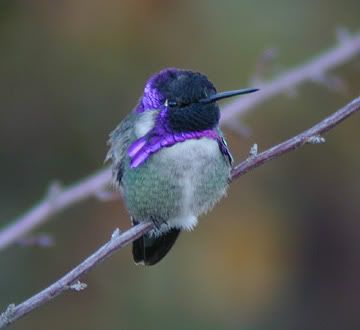 Attracting Hummingbirds by way of feeders- Here's the recipe for artificial nectar (syrup):
Do not put honey, Jell-O, brown sugar, fruit, koolaid, or red food coloring in your feeder! Honey ferments rapidly when diluted with water and can kill hummingbirds. The effects of red dye have not been not scientifically tested, and it is not necessary to color the water to attract birds to your feeder. Further, there are unverified reports that red dye can cause tumors in hummingbirds; this may or may not be true, but why take the chance? Nectar feeders need to be cleaned at least every other day during the hot summer months. Otherwise, the sugar will ferment and could cause deadly salmonella poisoning to hummingbirds.If you have the option, use only white sugar in your feeders. It is not necessary to supplement the sugar water with vitamins, protiens, minerals, or other substances. The birds themselves gather these from the nectar and buggies they consume. All we are doing is supplying them with a quick energy boost, or a treat :) However, if distilled, or demineralized water is to be used, some researchers believe that it would be wise to add a pinch of sodium-free salt to replenish the potassium chloride which is lost to help bring the salt content of the artifical necter back to normal levels found within natural necter. This may also help prevent electrolyte deficiencies. DO NOT use common household sodium chloride (table salt). Salt is only necessary when pure, filtered water is to be used. It is thought that hummingbirds are sensetive and attracted to UV light, so festooning the feeder(s) with red or orange surveyor's tape may help reflect UV and help attract more hummers. A single hummer needs the nectar of approximately 1,000 blossoms each and every day to sustain life? There are over 150 varieties of flowering plants in North America that attract hummingbirds. It is essential to keep in mind that hummers prefer tubular flowers that allow their long, needle-like bills to fit inside these tubes. Thus, their tongues can easily lap up the sweet nectar found deep inside the flower tubes. Some flowers to help attract hummingbirds would consist of: Beard Tongue (Penstemon) Bee Balm (Monarda) Bird of Paradise (Strelitzia reginae) Browallia Butterfly Weed (Asclepias tuberosa) California Fuchsia (Zauschneria) Canna Cardinal Flower (Lobelia cardinalis) Columbia Lily (Lilium columbianum) Columbine (Aquilegia) Coral Bells (Heuchera) Delphinium; Foxglove (Digitalis) Firespike Four O'Clocks Foxglove Fuchsia Geranium (Pelargonium) Gladiolus Hollyhock (Alcea rosea) Hosta Hummingbird Mint (Agastache) Impatiens Iris Jacobiana Jewelweed Lilac Lion’s Tail (Leonotis leonurus) Little Cigar Lobelia laxiflora Lupine (Lupinus) Ohio Buckeye Penstemon Petunia Phlox Salvia (Sage) Spider Flower (Cleome hasslerana) Trumpet Honeysuckle Yucca Zinnia Trees and shrubs: Azalea Butterfly Bush (Buddleia) Cape Honeysuckle Flame Acanthus Flowering Quince Lantana Manzanita Mimosa Red Buckeye Tree Tobacco Turk's Cap Weigela Vines: Coral Honeysuckle Cypress Vine Morning Glory Using pesticides around hummingbird plants is a very bad idea. Killing garden pests will also eliminate the small insects hummingbirds rely upon for protein. In addition, hummers might directly ingest pesticides sprayed onto flowers, which could sicken or kill the birds. Labels: How to Attract..., hummingbirds, recipes  Butterflies visit gardens for two reasons: Nectar is their sustinance and they need a place where the female butterfly can lay her butterfly eggs. Baby butterflies (caterpillars) have a different diet than full grown butterflies of course. To avoid the unsightliness of your plants being noshed and nibbled on, plant caterpillar host plants somewhere in the background. Keep in mind that if you do not keep plants that are essential for butterflies to successfully hatch eggs in, your garden will not have very many butterflies.  Food For Butterflies: Food For Butterflies:
Food For Caterpillars:
Labels: butterflies Sunday, June 11, 2006Bunny Faucet I found this on eBay and thought it was just too adorable not to post  Labels: bunnies, garden details  The frog killed, Saturday, June 10, 2006Too Cute! Labels: froggies Wednesday, June 07, 2006Very Beautiful This is a very beautiful gazebo on eBay by The GATZ. It's going for over $4,000. Which is actually a fair price for somthing this beautiful. Tonight I saw a very plain cherub statue that was less that 2 ft tall that was being sold for over $4,000. Labels: garden furniture, garden structures, gazeboes
|
 This blog is owned, maintained, watered, and nurtured by Kevin and Krystal